
Availability is not limited to whether a tester appears in a catalogue: the base instrument, package-specific fixture, validation documents, and delivery status all affect whether a laboratory can use it. By the end, you will be able to classify the required tester, request a useful quotation, and verify that the offered system supports your method, data controls, and qualification plan.
Key takeaways
- Request availability for the complete tester, fixtures, software, and accessories.
- Match the tester to the package format and failure mode.
- Convert the laboratory method into measurable purchase specifications.
- Check calibration, qualification records, and dispatch dates before accepting an offer.
What “available” means when a laboratory requests a digital tester
“Available” means little until it is tied to a specific model, configuration, fixture, and dispatch date. For digital tester availability, ask for stock status on the complete setup—not only the base instrument.
1. Identify the test and package first. A seal-strength tester for blister packs is not interchangeable with a vacuum-decay system for vials, and each may need a different nest, adapter, seal, or chamber. State the package, failure mode, sample dimensions, and required method.
2. Ask whether the complete configuration is physically in stock. Request confirmation of the model number, fixture part number, serial-number status, calibration status, and earliest dispatch date. “Base unit available” does not mean a pouch fixture or ampoule adapter is ready.
3. Treat demonstration-ready as a separate status. Ask whether the instrument is powered, configured with your fixture, and able to run representative samples under your proposed settings. A showroom unit without the required fixture proves little.
4. Apply a made-to-order equipment lens when the seller must manufacture the tester, engineer a fixture, or obtain a special sensor. Request the drawing-approval date, build duration, factory-acceptance plan, and shipment date.
5. For any quoted lead time, ask what starts the clock: purchase order, advance payment, technical approval, or sample receipt. Get separate dates for equipment, fixtures, installation, training, calibration documents, and qualification support. That exposes a real delivery plan for your pharmaceutical packaging laboratory.
Match the package format and failure mode to the tester
{"section":"A vial’s cracked neck, a blister’s weak seal, and a carton’s scuffed print require different measurements.
Choose the failure mode before choosing the instrument; a general leak result will not replace seal-strength or transport-durability evidence.\n\n| Package or failure | Suitable tester | What it tells you |\n| Vials, ampoules, bottles, and closures | Digital Top Load Tester or torque fixture | Measures compressive force, cap application, removal torque, or closure performance; use a nest or adapter matched to the container |\n| Blister packs, strip packs, sachets, pouches, and flexible laminates | Digital Peel Tester | Measures seal-opening force from a prepared strip; ASTM F88/F88M seal strength does not prove leak-tightness |\n| Flexible laminates, pouches, and sachets | Pin hole tester or package-integrity fixture | Finds holes or channels that could admit air, moisture, or microorganisms; specify the test medium and detection threshold |\n| Cartons, labels, and printed packs | rub-resistance tester | Measures print or coating loss after controlled rubbing, not seal integrity |\n| Blister packs, cartons, and paper-based packaging | bursting-strength tester | Measures pressure required to rupture the material or structure; it is destructive |\n\nUse the Digital Peel Tester for a reproducible seal comparison, not for a gross-leak claim.
Use a bursting-strength tester when rupture resistance matters, and a rub-resistance tester when handling damages print or coating. For bottles and vials, confirm the fixture, load range, and whether the test is destructive before comparing quotations. A digital readout alone does not make the method suitable."}
Turn the laboratory method into a purchase specification
A quotation is comparable only when it reproduces your validated method, not merely its test name. State the applicable clause of ASTM F88/F88M, ASTM F2096, USP <1207>, or the named ISO standards for packaging tests, then define the acceptance limit and test conditions.
| Method | Settings and measurement specification | Fixture and result |
|---|---|---|
| Seal strength | Jaw speed, seal width, preload, separation direction, force range, sampling plan, and pass limit | Package-specific jaws; peak force in N per seal width, with force-versus-distance export |
| Gross leak by bubble emission | Internal pressure, pressurisation time, immersion time, temperature, and defect criterion | Correct chamber or immersion fixture; pass/fail record and defect-location image |
| Vacuum- or pressure-decay integrity | Test pressure or vacuum, stabilisation time, measurement time, package volume, temperature, leak-rate units, and detection limit | Sealing fixture with verified leakage performance; decay curve and leak-rate output |
| Burst or creep | Ramp rate, target pressure, dwell time, and failure definition | Support fixture matching the package; burst pressure, time, and failure mode |
- Name every package format, material, seal geometry, and specimen preparation step.
- Specify destructive or non-destructive use, sample quantity, conditioning temperature, and operator loading method.
- Require sensor range, displayed resolution, accuracy, repeatability, linearity, calibration interval, and data-export format.
- Ask for fixture leakage limits and method sensitivity; displayed pressure or force digits do not prove defect detection.
- Include recipe control, barcode capture, audit trail, and changeover time when throughput matters.
A general-purpose leak tester still needs documented, package-specific validation before its results support release or shelf-life claims. Compare fixture cost and changeover effort alongside speed.
Check records, calibration, and qualification before accepting the offer
A numerical readout proves only that the instrument displays a number. Accept the offer after reviewing evidence that the measurement system, software, and records remain controlled from test execution through report approval.
1. Request a calibration certificate tied to the instrument serial number. It should identify the measured range, resolution, permissible overload, calibration interval, reference standards, uncertainty, and traceability to a national or international standard.
For leak testing, request the leak standard or reference artifact used; for pressure, load, torque, or transmission testing, request the applicable sensor and environmental checks.
2. Request completed or sample IQ, OQ, and PQ protocols and reports. Confirm that OQ challenges the specified measurement range and acceptance limits, while PQ uses your package, fixture, method settings, and operators. A factory demonstration alone does not qualify the instrument for release testing.
3. Identify whether electronic records or signatures replace required paper records. If they do, assess 21 CFR Part 11 controls and EU GMP Annex 11 expectations, including unique user access, record protection, validated operation, backup, and an audit trail that records changes, deletions, user identity, and time.
4. Test the proposed LIMS integration with representative results. Check data mapping, units, sample identification, failed-transfer handling, and whether the approved result remains linked to the raw record.
Put these documents under your quality system’s supplier and change-control review before issuing acceptance.
Build a quotation request that exposes lead time and total effort
Ask for a dated quotation that states whether the base instrument is in stock, demonstration-ready, made to order, or subject to a quoted lead time. Require separate dates for the instrument, application-specific fixture, software, installation, training, and qualification support.
Request these answers in writing:
- Which package formats will each nest, adapter, seal, or test chamber accept?
- What samples must you supply, how many, and at what preparation standard?
- Is an instrument demonstration available using your package and failure mode?
- What documents are included: manuals, calibration certificate, drawings, software details, and test method?
- What are the charges and lead times for installation qualification, operational qualification and performance qualification?
- What service response, preventive-maintenance interval, calibration interval, and spare-part terms apply?
- How long does changeover take between package types, and what tooling must an operator replace?
Compare quotations by total effort, not the lowest instrument price.
| Line item | Supplier must state | Cost or time to compare |
|---|---|---|
| Base tester | Stock status, configuration, delivery date | Capital cost and lead time |
| Fixture and tooling | Included formats, engineering status, changeover steps | Purchase cost and operator time |
| Samples and demonstration | Sample quantity, preparation, test location | Shipping, testing, and approval time |
| Documentation and qualification | Included protocols, records, execution support | Review hours and validation cost |
| Service and calibration | Response, travel, interval, traceability | Ownership cost |
| Data controls | Export, access, audit trail, Part 11 assessment | Implementation effort |
J.M. Engineering and Instruments can be asked to quote the tester, fixtures, demonstration, qualification documents, and service as separate line items, making omissions visible before approval.
Related products
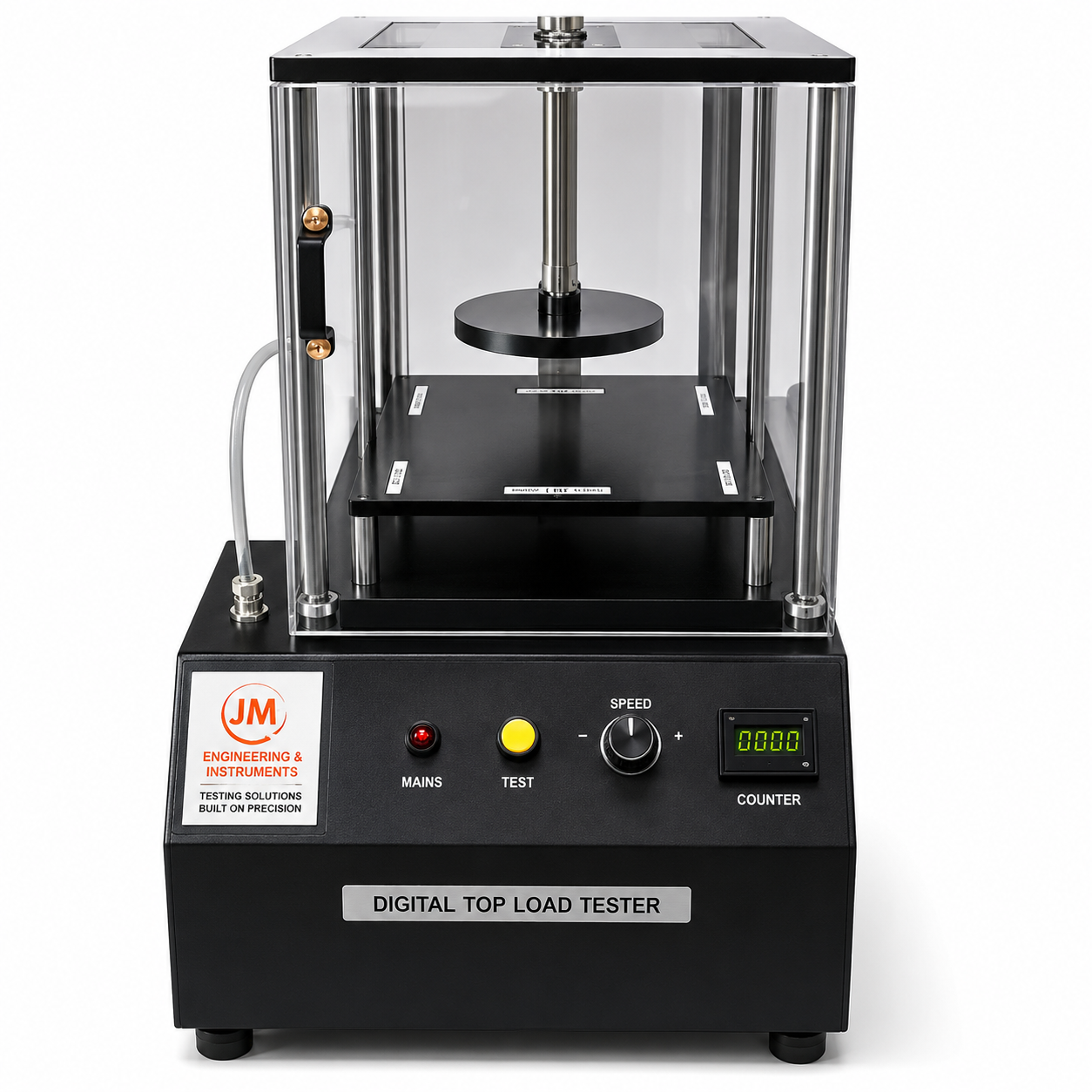 | Testing Equipments J. M. ENGINEERING & INSTRUMENTS Digital Top Load Tester Manufacturer & Supplier J. M. View product → |
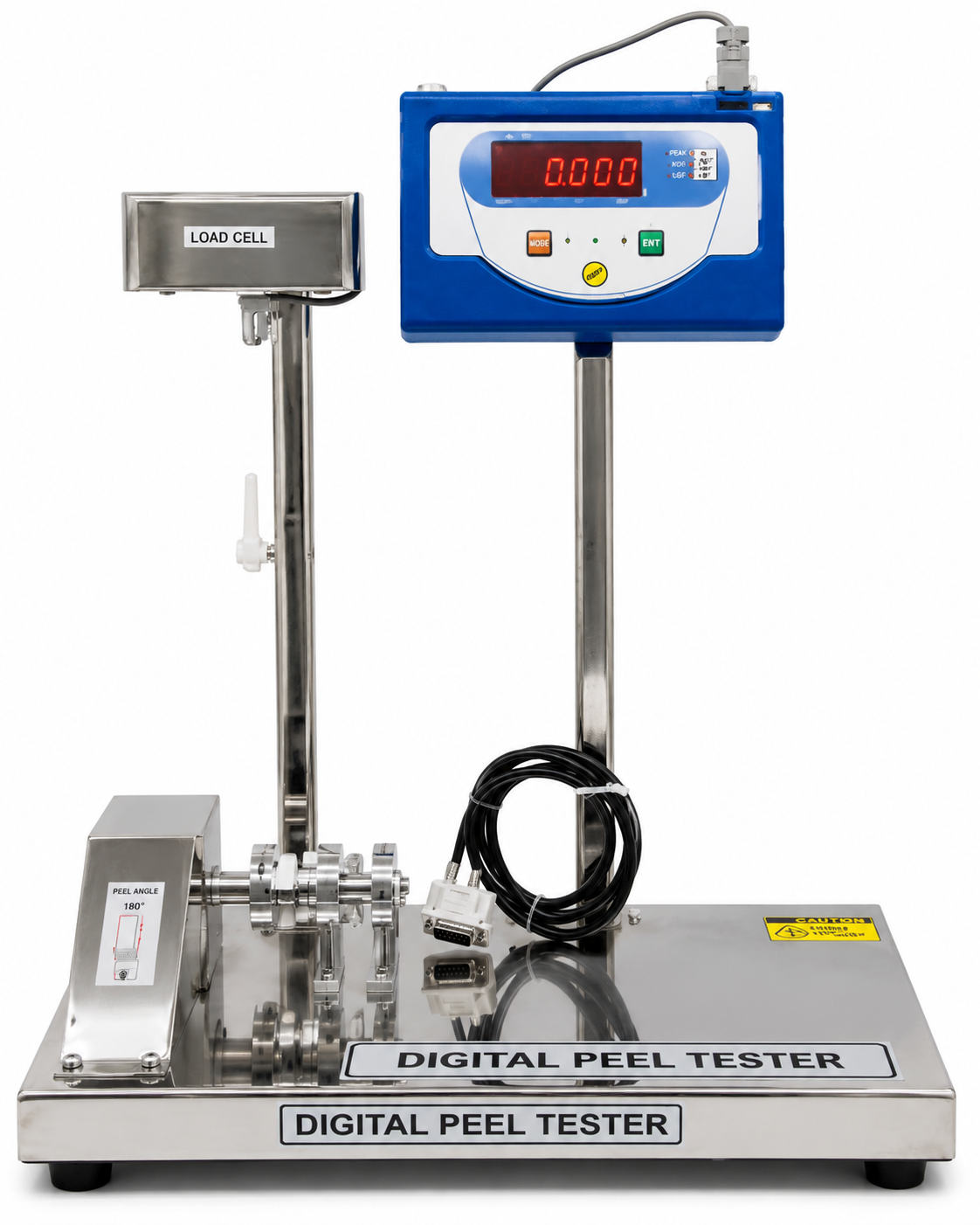 | Testing Equipments J. M. ENGINEERING & INSTRUMENTS Digital Peel Tester Manufacturer & Supplier J. M. View product → |
Frequently asked questions
What does digital tester availability mean for a pharmaceutical packaging laboratory?
It means the supplier can provide the specified model, configuration, fixtures, software, and accessories by a confirmed dispatch date—not merely the base instrument.
How do you choose a tester for pharmaceutical packaging?
Match the package format and failure mode to the instrument and fixture, such as a seal, leak, burst, compression, or puncture test.
What should a laboratory include in a digital tester purchase specification?
State the laboratory method, test range, accuracy, resolution, speed, sample dimensions, fixture requirements, data output, and acceptance criteria.
What records should you check before accepting a tester quotation?
Request calibration records, traceability details, qualification documents, manuals, software information, warranty terms, lead time, and the complete dispatch scope.
Related products
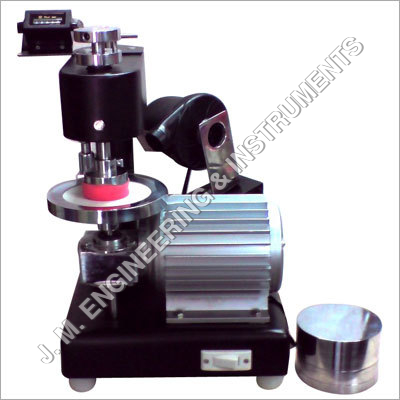 | Testing Equipments Standard Rub Resistance Tester J. M. ENGINEERING & INSTRUMENTS Standard Rub Resistance Tester Manufacturer & Supplier J. M. View product → |
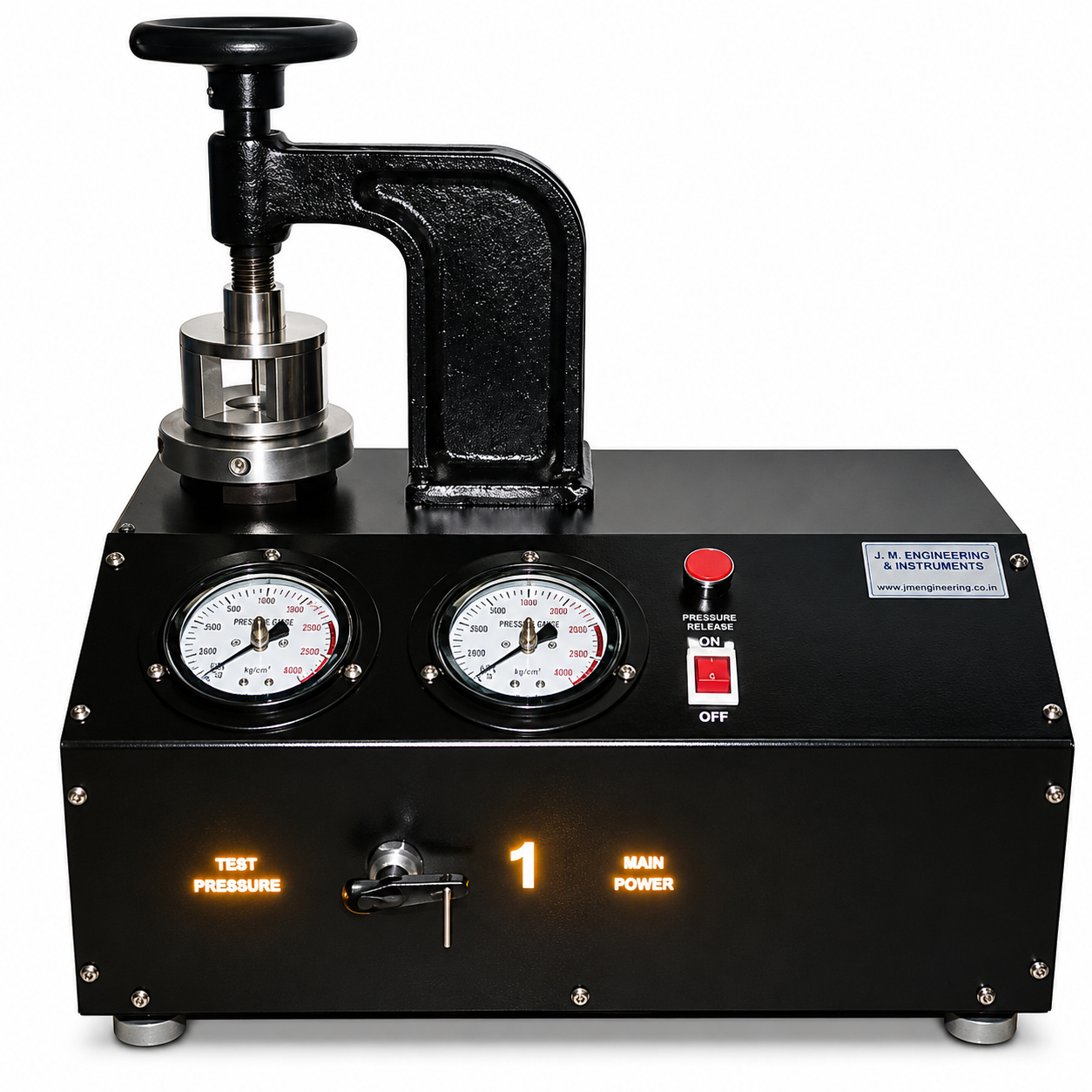 | Testing Equipments Standard Bursting Strength Tester J. M. ENGINEERING & INSTRUMENTS Standard Bursting Strength Tester Manufacturer & Supplier J. M. View product → |
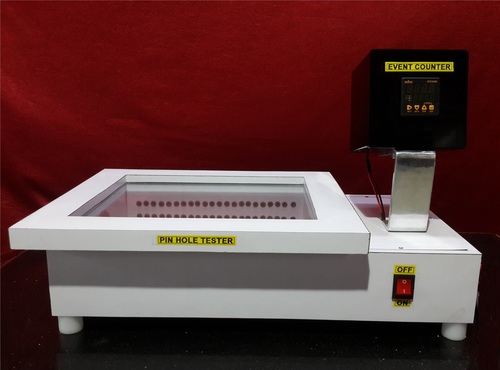 | Testing Equipments Pin Hole Tester with Event Counter J. M. ENGINEERING & INSTRUMENTS Pin Hole Tester with Event Counter Manufacturer & Supplier J. M. View product → |
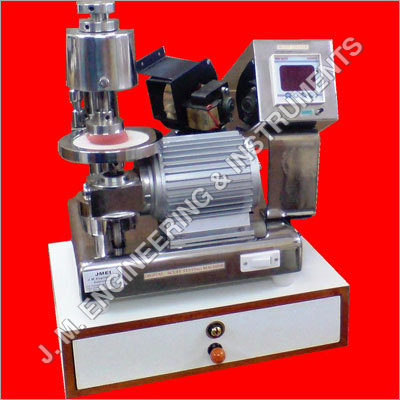 | Testing Equipments J. M. ENGINEERING & INSTRUMENTS Rub Resistance Tester Manufacturer & Supplier J. M. View product → |