
A Sigma mixer kneads and disperses viscous soap, while a hot air oven dries or conditions a stationary sample with circulating heated air. By separating those unit operations, you can identify the right machine for each soap stage, test whether jacket heating is enough, and specify a mixer without relying on nominal capacity alone.
Key takeaways
- Use a sigma mixer for kneading and blending viscous soap masses.
- Do not treat jacket heating as a replacement for hot-air drying.
- Match blade geometry to viscosity, powders, fragrances and discharge needs.
- Test torque, working volume and discharge before scaling production.
Match the Machine to the Soap Process
A Sigma mixer does not perform the same job as a hot air oven. Its two counter-rotating blades apply mechanical shear and movement, making a sigma mixer for soap manufacturing suitable for blending fatty acids or oils with powders, dispersing colourants and fragrances, kneading soap noodles or chips, and producing a homogeneous high-viscosity mass.
| Machine | Main action | Suitable soap application |
|---|---|---|
| Sigma mixer | Shear, fold and knead a moving batch | Additive blending, noodle or chip kneading, high-viscosity mass preparation |
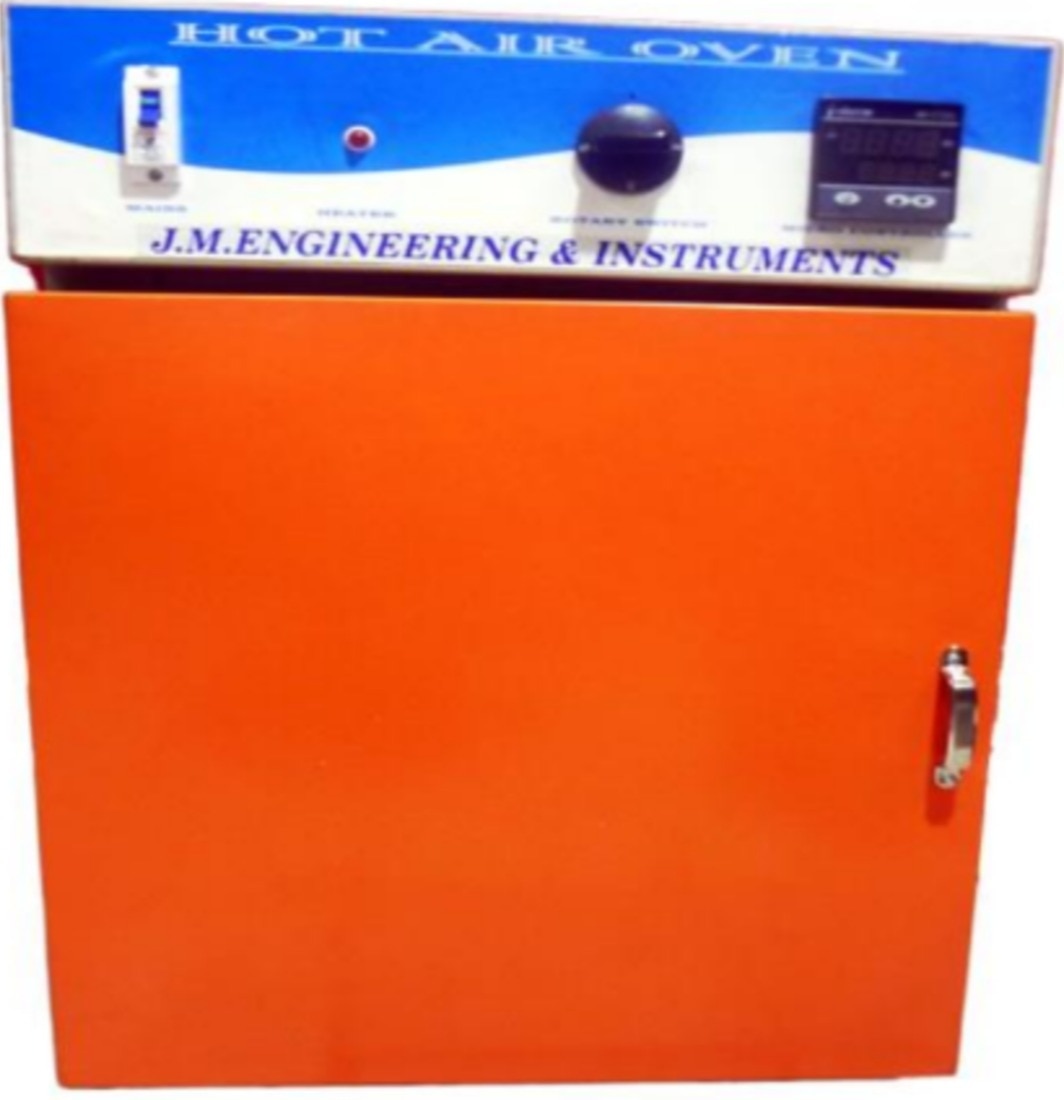
| Hot air oven | Heat a stationary sample with circulating hot air | Laboratory drying, moisture-loss testing, sample conditioning and heat treatment |
1. Use the Sigma mixer for batch blending and kneading, not as the normal replacement for spray-drying, vacuum-drying, milling, plodding or caustic saponification equipment. Low-viscosity liquid soap also needs bulk circulation rather than slow kneading, so an anchor, paddle, propeller, rotor-stator or inline mixer may fit better.
2. Retain the oven when the test requires a defined drying temperature, exposure time, moisture-loss result or heat-treatment cycle. A mixer jacket can heat or cool the batch indirectly, but heated walls do not create circulating hot air around an exposed sample.
3. Reduce a separate drying step only after deliberately changing the formulation and process. Use pre-dried noodles, or combine mixing with controlled heated or vacuum-assisted moisture removal; do not assume a standard atmospheric Sigma mixer will deliver oven-like drying merely because its jacket can be heated.
Why Jacket Heating Does Not Equal Hot-Air Drying
A heated Sigma jacket cannot deliver the same drying result as a hot-air oven. The jacket is a second shell around the mixing vessel, separated from the soap by the vessel wall.
Specify these points separately:
- Jacket construction: identify the jacketed area, wall material, weld design, insulation, and pressure rating.
- Heat-transfer medium: state whether the system uses hot water, thermal oil, or chilled water, and identify the circulation method.
- Temperature range: obtain the minimum and maximum jacket setpoints under load, not an unloaded headline figure.
- Control accuracy: request the stated setpoint tolerance, sensor location, calibration method, and response time.
- Product-contact temperature: measure the soap itself at representative locations; a jacket reading alone is insufficient.
Jacket heat enters through the wall. An oven circulates heated air around an exposed, stationary sample. Dense soap can therefore develop a hot wall zone while its centre remains cooler, leaving uneven moisture even when the mixer surface looks uniform.
Jacket control supports additive incorporation, fragrance blending, and viscosity control. It does not guarantee uniform moisture removal.
| Comparison point | Sigma jacket | Hot-air oven |
|---|---|---|
| Movement | Kneads and shears soap | Exposes a stationary sample to circulating air |
| Moisture result | Requires before-and-after testing | Supports defined drying conditions |
| Process risks | Hot and cold zones, cleaning, operator contact | Ventilation, hot surfaces, and exposure during loading |
- Record product temperature at several locations, moisture before and after processing, mixing time, ventilation needs, and operator exposure.
- Retain the oven for laboratory tests requiring a defined drying temperature, exposure time, constant-mass measurement, or sample-conditioning protocol.
Choose the Mixer Geometry for the Formulation
A Sigma mixer is the right production machine when soap is stiff, cohesive, and difficult to turn. Its counter-rotating blades knead dense mass; they do not provide the rapid bulk circulation required by low-viscosity liquid soap. For the latter, compare an anchor, paddle, propeller, rotor-stator, or inline mixer.
| Option | Best fit | Main limitation |
|---|---|---|
| Sigma mixer or kneader | Stiff soap mass, noodles, chips, powders, colourants, and fragrance | Slow for thin liquids |
| Planetary mixer | High-viscosity laboratory batches and intensive blending | Limited production throughput |
| Ribbon blender | Freer-flowing powders and dry premixes | Poor choice for cohesive mass |
| Plodder | Compression, refining, and continuous bar formation | Not a general-purpose batch mixer |
| Vacuum mixer | Deaeration or controlled moisture removal during mixing | Requires vacuum, sealing, and moisture controls |
For a sigma mixer for soap manufacturing, specify the process rather than accepting a catalogue capacity. Give the supplier:
- Batch mass, working volume, fill ratio, moisture content, viscosity, powder loading, torque at operating speed, motor rating, blade or Z-arm geometry, and target mixing time.
- Jacket duty, discharge method, cleanability, and whether the batch must leave hot or cold.
- SS 304 or SS 316 contact parts, seals, shaft design, surface finish, and chemical compatibility; “stainless steel” alone is incomplete.
J.M. Engineering and Instruments can be asked to state these points in the quotation, including whether the proposed geometry suits the actual soap formula rather than merely the product category. Witness the machine with your formulation before purchase. A surface sample can look uniform while dense soap retains unmixed pockets.
Related product
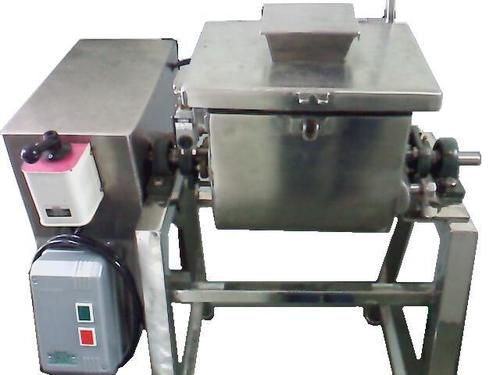 | Testing Equipments J. M. ENGINEERING & INSTRUMENTS Sigma Mixer Manufacturer & Supplier J. M. View product → |
Prove Capacity, Torque, and Discharge Before Scale-Up
A production batch is proven by turnover, power demand, uniformity, and discharge—not by matching the laboratory bowl’s volume ratio. Usable working volume determines whether the Z-blades can move the soap. Overfill the bowl and the batch stops turning; underfill it and material stays on the walls.
1. Define the batch from rheology, moisture content, powder and additive loading, target mixing time, jacket duty, and discharge method. Do not multiply the laboratory batch by a simple volume ratio. Request the working-volume range and fill limits, not only gross bowl volume.
2. Request torque at the operating blade speed and evidence that the mixer starts with a loaded batch. Motor horsepower alone cannot show whether a stiff soap mass will start or continue moving.
3. Witness a trial with the actual soap base, powders, colour, fragrance, and moisture level at minimum, normal, and maximum loads. Record blade speed, motor current or torque, product temperature at several locations, moisture before and after processing, mixing time, discharge time, and samples from the top, centre, and bottom.
4. Check each sample for additive distribution and moisture uniformity. A smooth surface sample can hide an unmixed pocket in dense soap.
5. Test the bottom valve, hydraulic tilting, screw discharge, or ram assistance against maximum residual batch, discharge time, cleaning time, and the required discharge temperature. A bottom valve may not empty stiff soap reliably, while powered discharge adds cost and cleaning points. Confirm whether the process must discharge hot or cold before selecting the arrangement.
Frequently asked questions
Can a sigma mixer replace a hot-air oven in soap production?
No. A sigma mixer mixes and kneads viscous soap while applying mechanical energy; a hot-air oven removes moisture through heated air circulation. Use a mixer for blending or kneading, and an oven when controlled drying is required.
What does jacket heating do in a sigma mixer?
Jacket heating transfers heat through the mixer vessel wall and helps warm or maintain the batch temperature. It does not provide the same airflow, surface exposure or moisture-removal mechanism as hot-air drying.
How should soap makers choose sigma mixer geometry?
Compare blade shape, clearance, working volume and discharge arrangement against the formulation. Test the mixer with the actual soap mass, powders, colourants and fragrance because viscosity and stickiness determine mixing performance.
What should you test before scaling up a soap mixer?
Measure torque across the batch, confirm working capacity, check temperature uniformity and verify that the discharge system empties the vessel without leaving excessive residue.