
A rub resistance tester measures how a printed, coated, laminated, textile, or finished surface withstands controlled repeated contact. By the end, you will know how the test works, which standard and variables govern a valid result, and how to inspect the machine’s precision parts before comparing suppliers or approving a purchase.
Key takeaways
- Control load, stroke count, speed, specimen conditioning, and wetness.
- Match dry or wet rub testing to the failure mode and named standard.
- Record machine settings and specimen details so results remain comparable.
- Inspect precision machine parts when repeated tests produce inconsistent results.
What a Rub Resistance Tester Measures
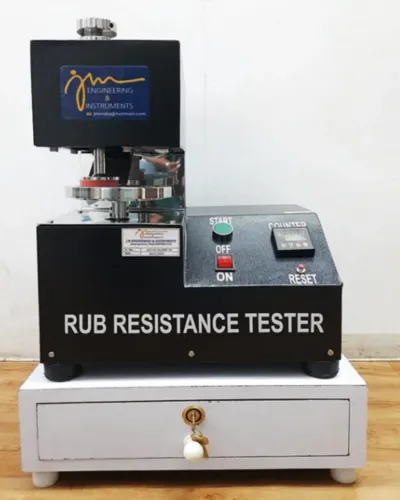
So, what is a rub resistance tester? It is a controlled reciprocating-abrasion instrument that moves a weighted rubbing element across a defined area of a specimen for a specified number of strokes or cycles. It is used to challenge printed packaging and coated surfaces under repeatable conditions.
Its essential parts are:
- Rubbing head, which contacts the specimen
- Specimen holder, which keeps the surface flat and secure
- Load mechanism, which applies the prescribed force
- Cycle counter, which records the rubbing distance or count
The result shows how the tested surface responded to that particular rubbing challenge. You assess visible damage, transferred colour, loss of gloss, coating removal, or substrate exposure, then record the rating or appearance change required by the method.
ASTM D5264 uses dry and wet rubbing to compare abrasion resistance in printed materials; it is not a universal method for every substrate or coating.
A pass means only that the specimen survived the specified test conditions. It does not prove resistance to every handling situation, and it does not measure tensile strength or burst strength. A textile crockmeter can produce a different result because its rubbing finger, material, load, moisture condition, and rating system differ.
Compare results only when the method and conditions match.
From Conditioned Specimen to Dry or Wet Rub Result
Start by conditioning the printed, coated, laminated, textile, or other specimen under the atmosphere specified by the test method. Secure it flat in the holder; a wrinkle or shifting edge changes contact pressure and produces misleading transfer or scuffing.
Carry out the run in this order:
- Place the specified rubbing material on the reciprocating rubbing head.
- Set the prescribed load, stroke or travel, rubbing direction, and cycle count. ASTM D5264 is the key Sutherland rub-tester method for printed materials, but it is not a universal abrasion method.
- Run the head across the defined area without stopping. Record ink transfer, scuffing, colour change, gloss loss, coating removal, or exposed substrate.
- Rate the specimen using the method’s visual scale, transferred-colour comparison, or instrument reading. Do not treat the result as a tensile-strength or burst-strength measurement.
- Repeat the procedure separately for dry and wet conditions; never infer wet performance from a dry-rub pass.
| Condition | How to run it | What to control |
|---|---|---|
| Dry rub | Use the specified dry rubbing material without liquid | Load, cycles, stroke, direction, and rating method |
| Wet rub | Apply the named liquid before rubbing, then follow the specified delay | Water, detergent solution, sweat solution, oil, or another liquid; quantity and application procedure |
Dry and wet results belong in separate report lines because moisture can soften a coating, mobilise dye or ink, change friction, and increase transfer. These controls matter across rub resistance testing applications such as cartons, labels, flexible films, paper, board, coatings, laminates, and industrial markings.
Match the Machine to the Standard and Failure Mode
Choose the test from the failure your specification names, not from the instrument’s marketing label. “Ink rubs off,” “colour transfers,” “coating scuffs,” and “abrasive wear” describe different contact conditions and need different methods.
| Failure named | Matching method and conditions | Evidence to assess |
|---|---|---|
| Packaging print or label ink transfer | Sutherland-style reciprocating rub; use the specified load, stroke, cycle count, and dry or wet rubbing material | Transferred ink, visible scuffing, substrate exposure |
| Textile colour transfer | ISO 105-X12 or AATCC TM8; use the prescribed crocking finger, standard fabric, load, moisture condition, and rating scale | Staining on the rubbing cloth and shade change |
| Coating or laminate scuffing | Use the product specification’s reciprocating rub method with its approved abradant and load | Gloss loss, coating removal, scratches, or exposed substrate |
| General abrasive wear | ASTM D4060 Taber abrasion with the named wheel and load | Mass loss or wear cycles, not ink-transfer appearance |
Do not substitute an ASTM D4060 result for a Sutherland-style result. Taber uses rotating abrasive wheels; Sutherland testing uses repeated reciprocating contact over a short stroke, so the contact geometry and failure mechanism differ.
Treat the rubbing face and abradant as test variables. Replace them at the defined interval, reject glazed or contaminated material, and ask for cleaning instructions, approved rubbing materials, method-specific weights, and fixtures.
For paper, board, textiles, and hygroscopic coatings, condition specimens at the selected method’s temperature and relative humidity before testing; otherwise moisture changes friction and coating behaviour. Record the load, material, wet or dry state, cycles, stroke, direction, and rating method.
Why Precision Machine Parts Control Repeatability
A repeatable result starts with contact geometry, not the cycle counter. Parallel, flat rubbing platens, a stable specimen clamp, a calibrated load carrier, low-play guides or pivots, a controlled stroke, and a fixture that prevents specimen creep all matter.
An eccentric load or tilted rubbing face can change ink transfer even when motor speed and cycle count remain correct.
Choosing a precision machine parts rub resistance tester in Mumbai means asking for dimensional inspection records for the rubbing head, platen, fixture, and guides. Request material and heat-treatment certificates where relevant, plus assembled-instrument checks for load, stroke, cycle count, and platen alignment.
| Part or check | Evidence to request | Variation it controls |
|---|---|---|
| Rubbing head and platen | Flatness, parallelism, dimensions | Uneven pressure and inconsistent scuffing |
| Clamp, fixture, guides | Dimensional records and play checks | Specimen creep, wrinkles, and changing contact area |
| Load and motion | Traceable load verification, stroke and cycle checks | Eccentric force, travel errors, and false comparisons |
Treat the rubbing face and abradant as consumables: wear, glazing, embedded ink, contamination, and incorrect hardness alter the test. Ask the rub tester equipment supplier for approved materials, cleaning instructions, replacement intervals, method-specific weights, and traceable verification equipment. J.M. Engineering and Instruments is worth evaluating against those practical records, not a general “high precision” claim.
Validate the assembled machine with your actual substrate and ASTM D5264 method conditions before accepting production results.
Related products
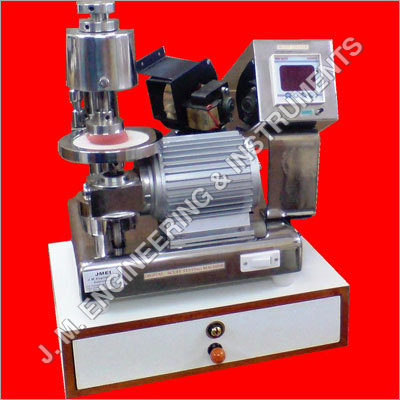 | Testing Equipments J. M. ENGINEERING & INSTRUMENTS Rub Resistance Tester Manufacturer & Supplier J. M. View product → |
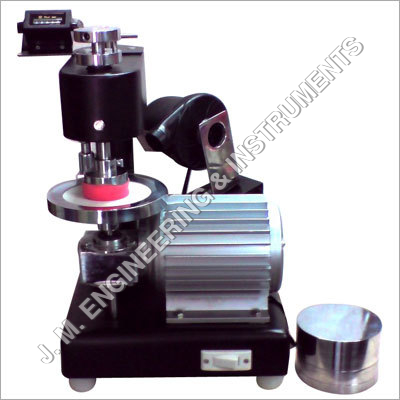 | Testing Equipments Standard Rub Resistance Tester J. M. ENGINEERING & INSTRUMENTS Standard Rub Resistance Tester Manufacturer & Supplier J. M. View product → |
Record the Variables That Make Results Comparable
Two rub-resistance results are comparable only when the reports describe the same specimen, preparation, contact conditions, motion, and rating method. Record these fields before accepting a supplier result or comparing machines:
1. Identify the substrate, print or coating system, ink, laminate, finish, and specimen orientation. Include cure time, drying temperature, conditioning duration, temperature, and relative humidity.
2. Name the method and instrument configuration. ASTM D5264 covers Sutherland-style dry and wet abrasion of printed materials; ASTM D4060 uses rotating abrasive wheels and produces a different wear result. Do not convert one result into the other.
3. Record the rubbing material, applied load, rubbing-head dimensions, stroke or travel, rubbing direction, speed, and number of cycles. A change in any one of these can alter friction, transfer, or scuffing.
4. Report dry and wet results in separate lines. For wet testing, specify the liquid, quantity, application method, delay before rubbing, and whether the specimen was evaluated wet or after drying.
5. State the rating method and evidence: transferred colour, visible scuffing, coating removal, substrate exposure, gloss loss, colour change, or an instrument reading. Attach photographs when visual grades decide acceptance.
For a purchase evaluation, require these fields in the supplier’s test template and repeat the comparison with identical consumables and settings. A dry-rub pass does not establish wet-rub performance.
Frequently asked questions
What does a rub resistance tester measure?
It measures how a printed, coated, or treated surface withstands controlled reciprocating rubbing under a defined load and stroke count.
How do dry and wet rub tests differ?
A dry rub uses an unmoistened rubbing material, while a wet rub introduces a specified liquid condition before or during rubbing. The result shows how the surface behaves under each use condition.
How do you choose a rub resistance tester?
Match the tester’s load, stroke length, speed, rubbing material, wetting method, and cycle control to the standard and failure mode you need to reproduce.
Why do precision machine parts affect rub test repeatability?
Worn guides, uneven pressure, backlash, or a misaligned rubbing head can change contact conditions between tests and make results difficult to compare.